Revealing Place Through Natural Pigments
I just returned from a wonderful trip to the Utah desert, with time in Green River and Moab. I was representing the Historic Colfax Downtown Association at the Fieldwork Summit, hosted by Epicenter and the Building Common Ground program and supported by the Mellon Foundation. Colfax was recently selected as one of 20 rural and tribal communities across the US reimagining what our communities can be. With support from leaders in the nonprofit and rural design fields, each community is working on a project to improve the lives of the people who live there.
Our project will create a downtown plan that seeks to capture some of the energy and traffic along the I-80 corridor and bring people into our historic downtown to support the small businesses on Main Street. At the summit, we met inspiring people from all corners of the country and heard about the important work they’re doing in community healthcare, historic and cultural preservation, storytelling, placemaking, and museums. I’ll be sharing more as our project unfolds, but for now I wanted to highlight a craft workshop I attended during the summit.
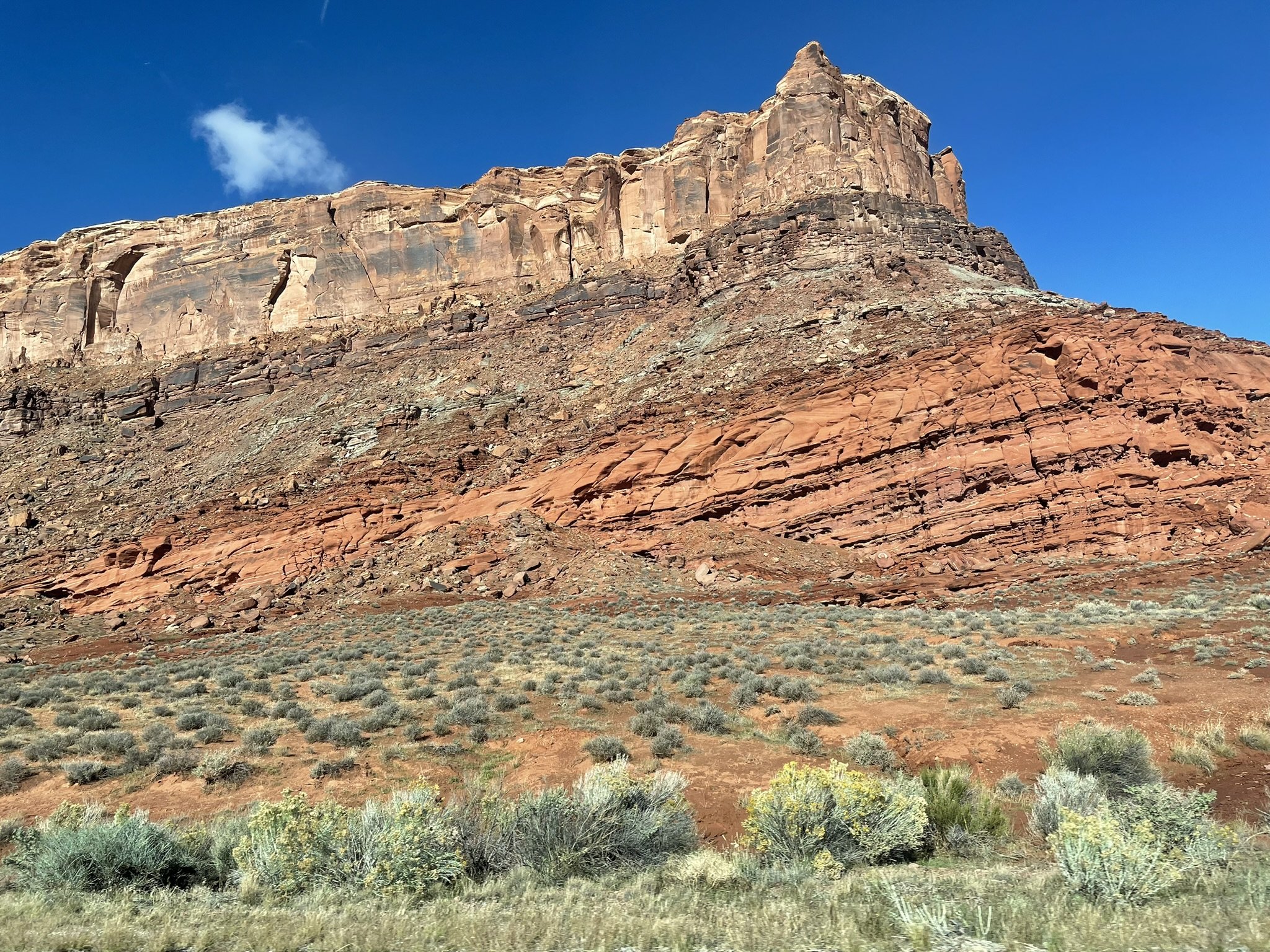
A layered rock face near Moab, Utah.
I had the opportunity to take part in Material Geologies: Reading Place & Community Through Ochre, a pigment making workshop led by Elpitha Tsoutsounakis. Elpitha is a designer, researcher, and educator from Salt Lake City who recently opened a bookstore there, Books & Supply. The workshop was held at the Epicenter headquarters in Green River, our local host for the summit. Epicenter is a remarkable community hub for downtown revitalization, affordable housing, and rural design, and a gathering space for the whole Green River community.
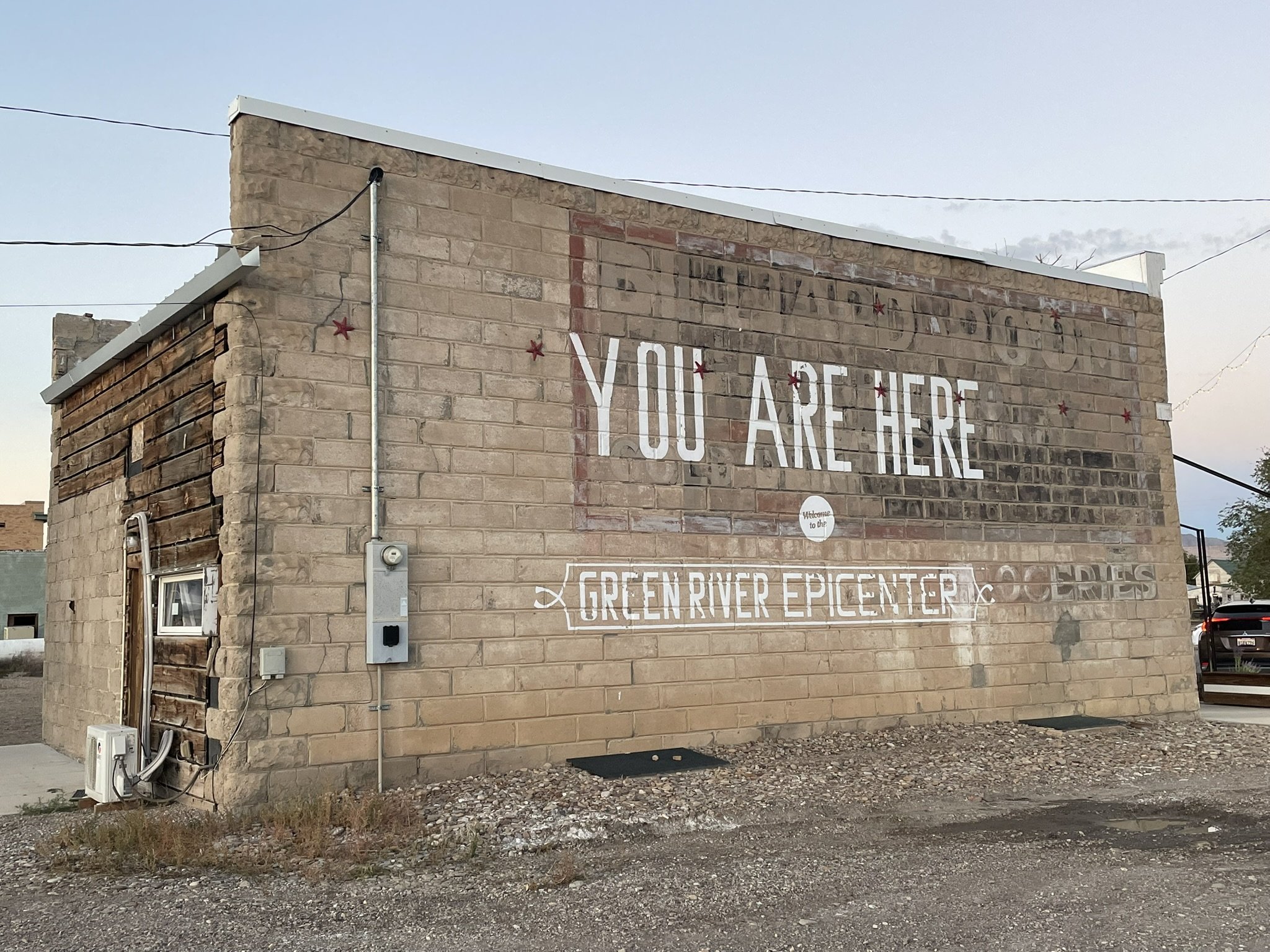
Epicenter Headquarters, Green River, Utah.
Elpitha brought a collection of rocks from the region and taught us how to process them into earth pigments. One of the things that struck me most about the Utah desert was the soft palette of pastels in its layered sedimentary rock. These iron-rich earth pigments appear in an array of colors: grays, greens, blues, oranges, yellows, and reds.
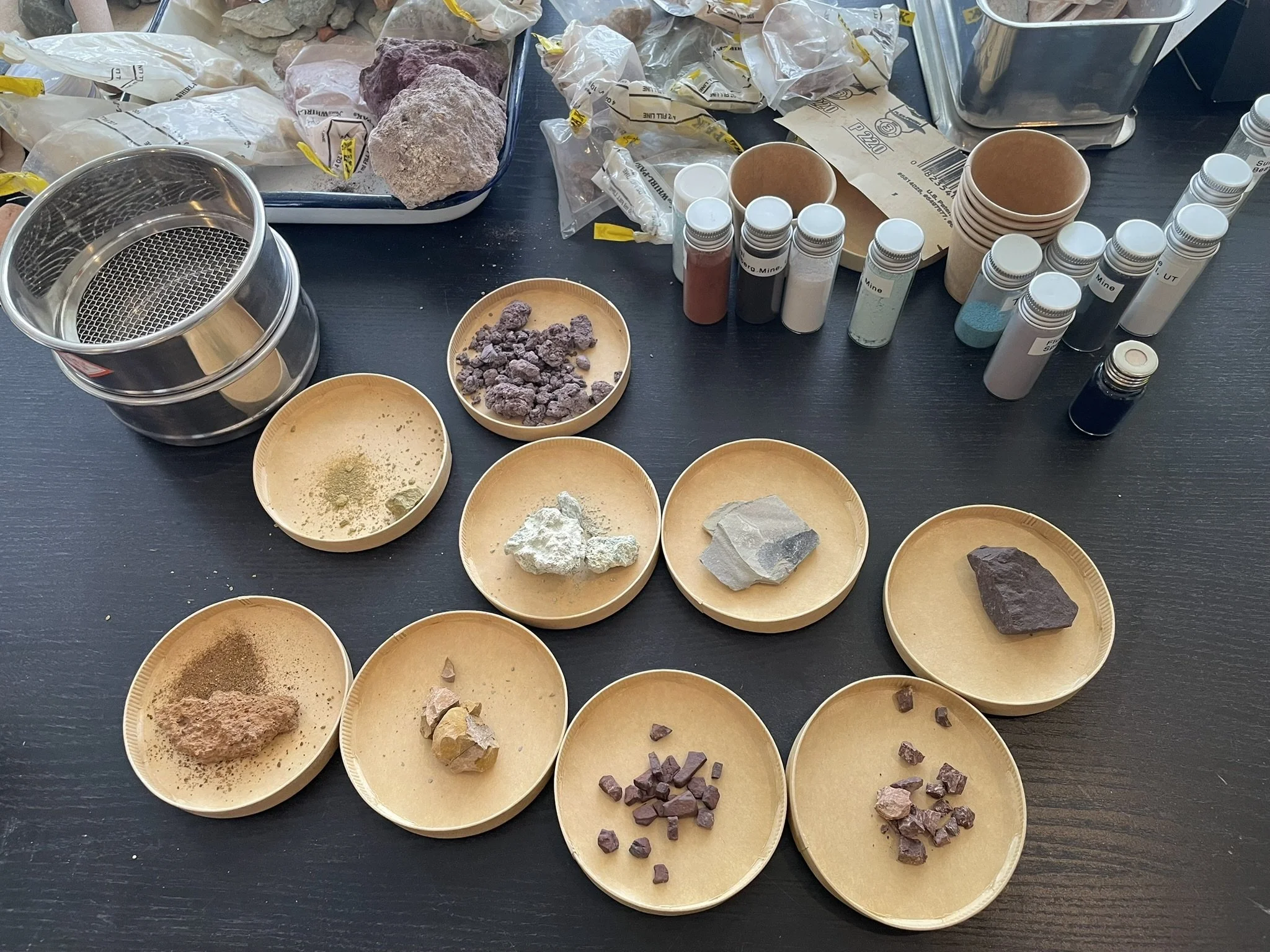
Earth pigments from Utah.
The pigment making process involved grinding and sifting the rocks into a fine powder, then adding water and a binder to create watercolor paints. I first learned this process over a decade ago at a workshop at Wildcraft Studio School in Oregon’s Columbia River Gorge. Although the process was the same, the results varied greatly, because the stones came from a completely different landscape. I appreciate how the colors of the pigments hold the experience and landscape of a place. As someone who is always looking for the sensory ways we experience place, I loved that we could create art materials from the land itself.
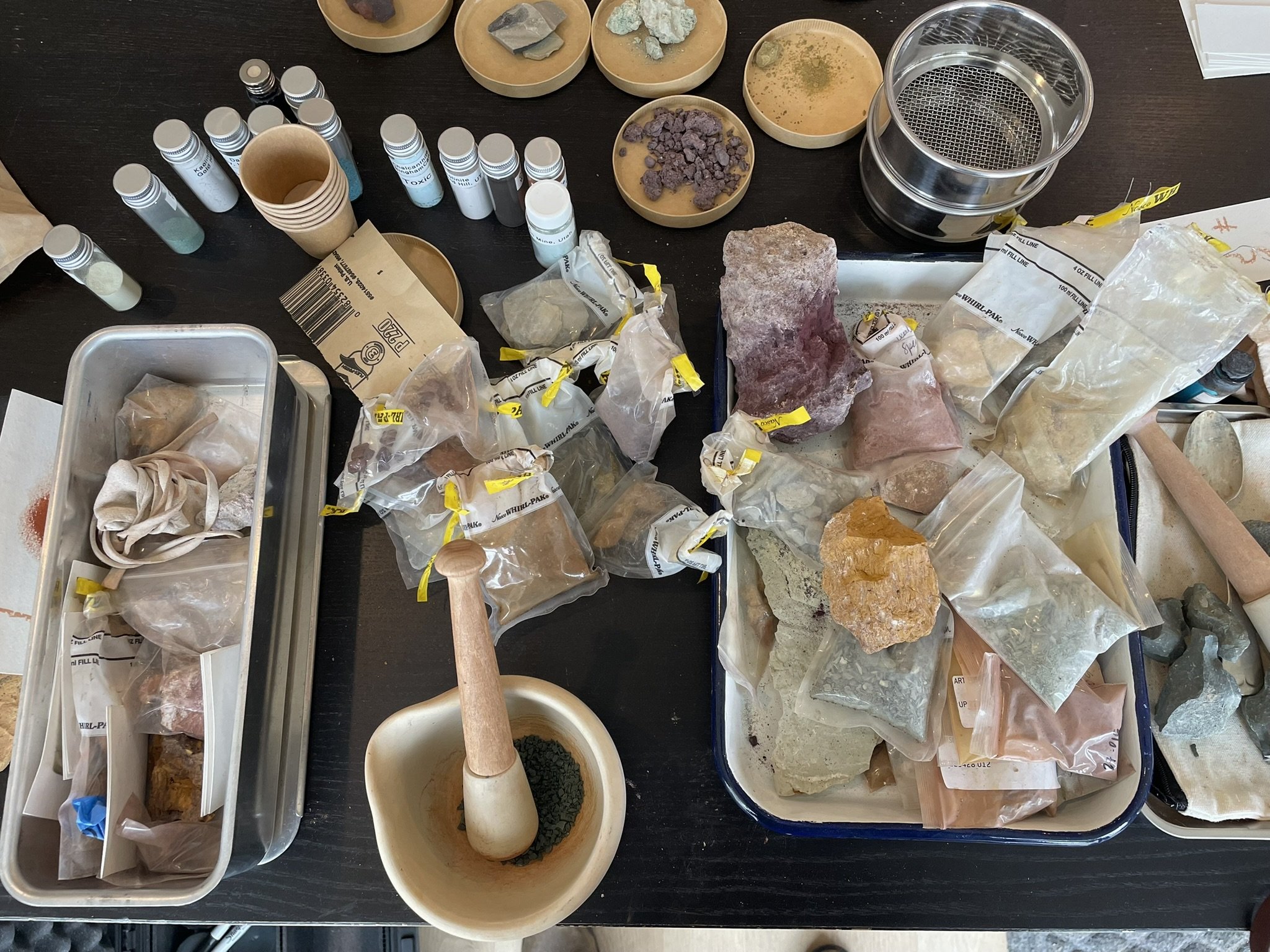
Our basic tools for grinding and processing pigments.
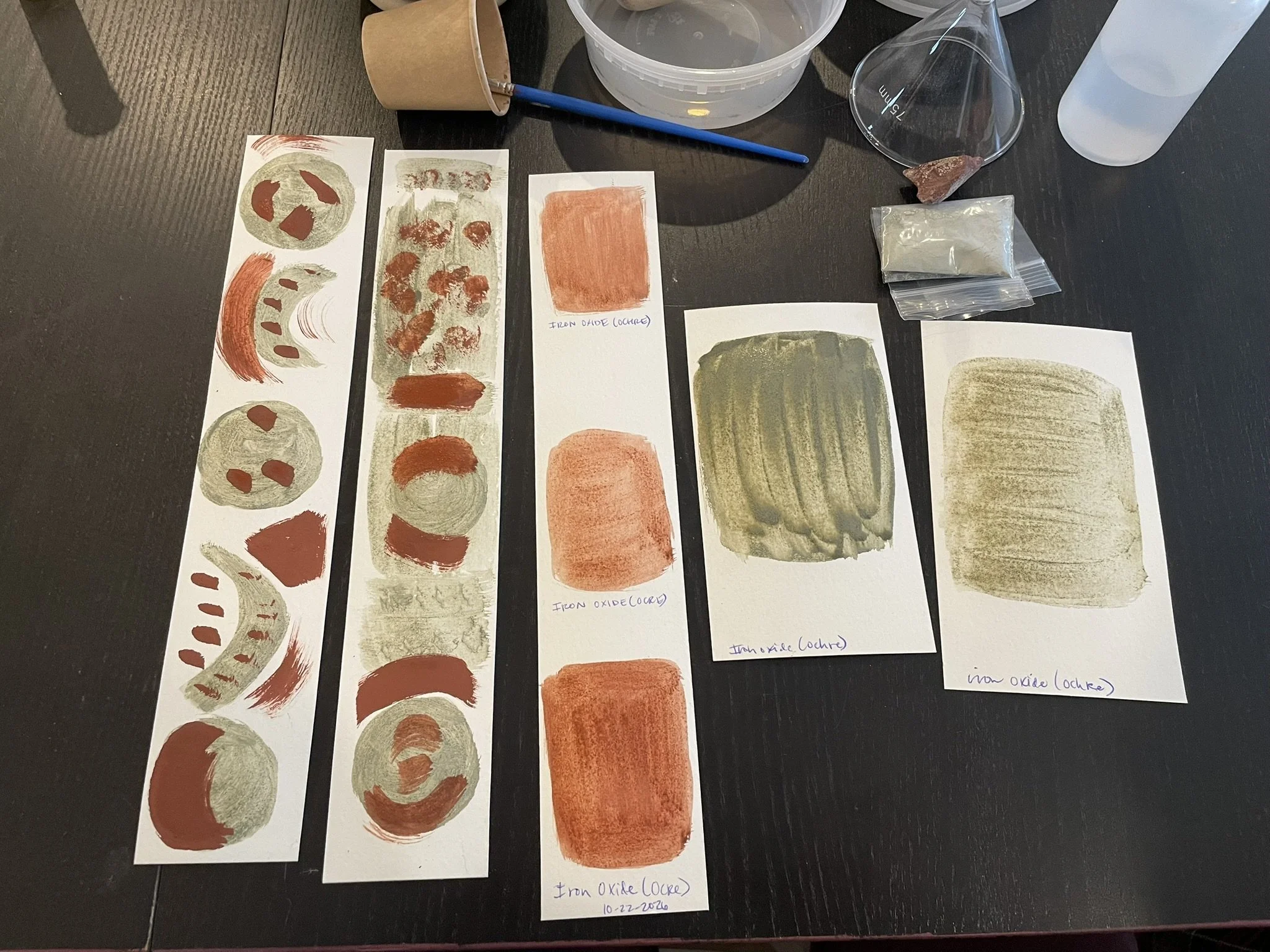
Color swatches with iron oxide pigments (ochres).
I hope to bring a pigment making class to Craftfolk in the future. Let us know if you’d be interested in this type of class, and sign up for our newsletter to hear when new classes are announced. In the meantime, I encourage you to check out Books & Supply and Elpitha’s work: @books___and
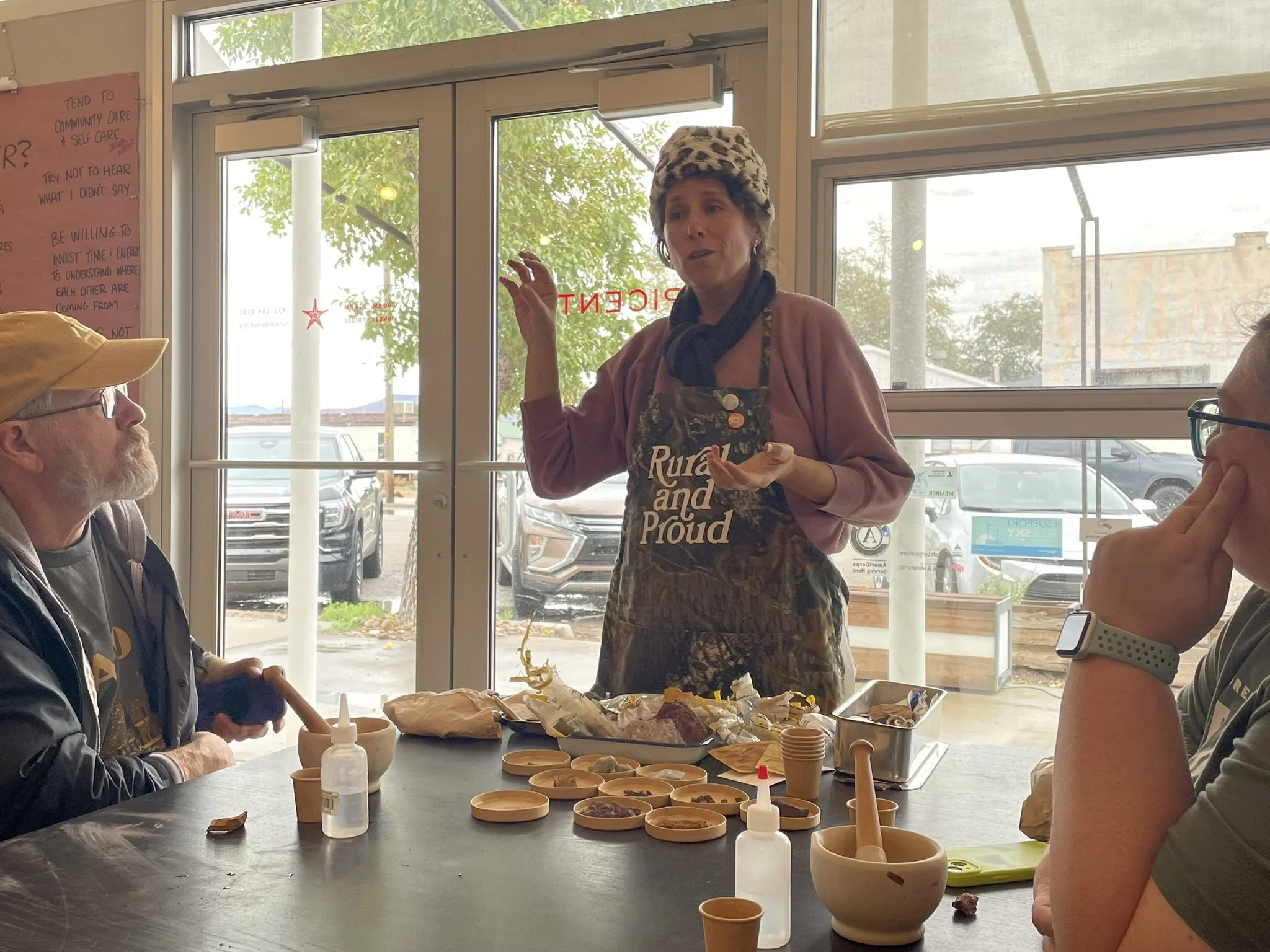
Elpitha sharing about the pigment making process.